Skip to content
⚠️ This is documentation for AG2 Classic (autogen package), which is in maintenance mode. For the latest version, use AG2 v1.0+ (ag2 package) at docs.ag2.ai.

2024#

What's New in AutoGen?

Deprecation Notice

Some features referenced in this blog post (AgentOptimizer, GPTAssistantAgent, multimodal agents) were deprecated in v0.12 and removed in v0.14. This post is retained as a historical record.
autogen is loved

TL;DR

  • AutoGen has received tremendous interest and recognition.
  • AutoGen has many exciting new features and ongoing research.

Five months have passed since the initial spinoff of AutoGen from FLAML. What have we learned since then? What are the milestones achieved? What's next?

Background

AutoGen was motivated by two big questions:

  • What are future AI applications like?
  • How do we empower every developer to build them?

Last year, I worked with my colleagues and collaborators from Penn State University and University of Washington, on a new multi-agent framework, to enable the next generation of applications powered by large language models. We have been building AutoGen, as a programming framework for agentic AI, just like PyTorch for deep learning. We developed AutoGen in an open source project FLAML: a fast library for AutoML and tuning. After a few studies like EcoOptiGen and MathChat, in August, we published a technical report about the multi-agent framework. In October, we moved AutoGen from FLAML to a standalone repo on GitHub, and published an updated technical report.

StateFlow - Build State-Driven Workflows with Customized Speaker Selection in GroupChat

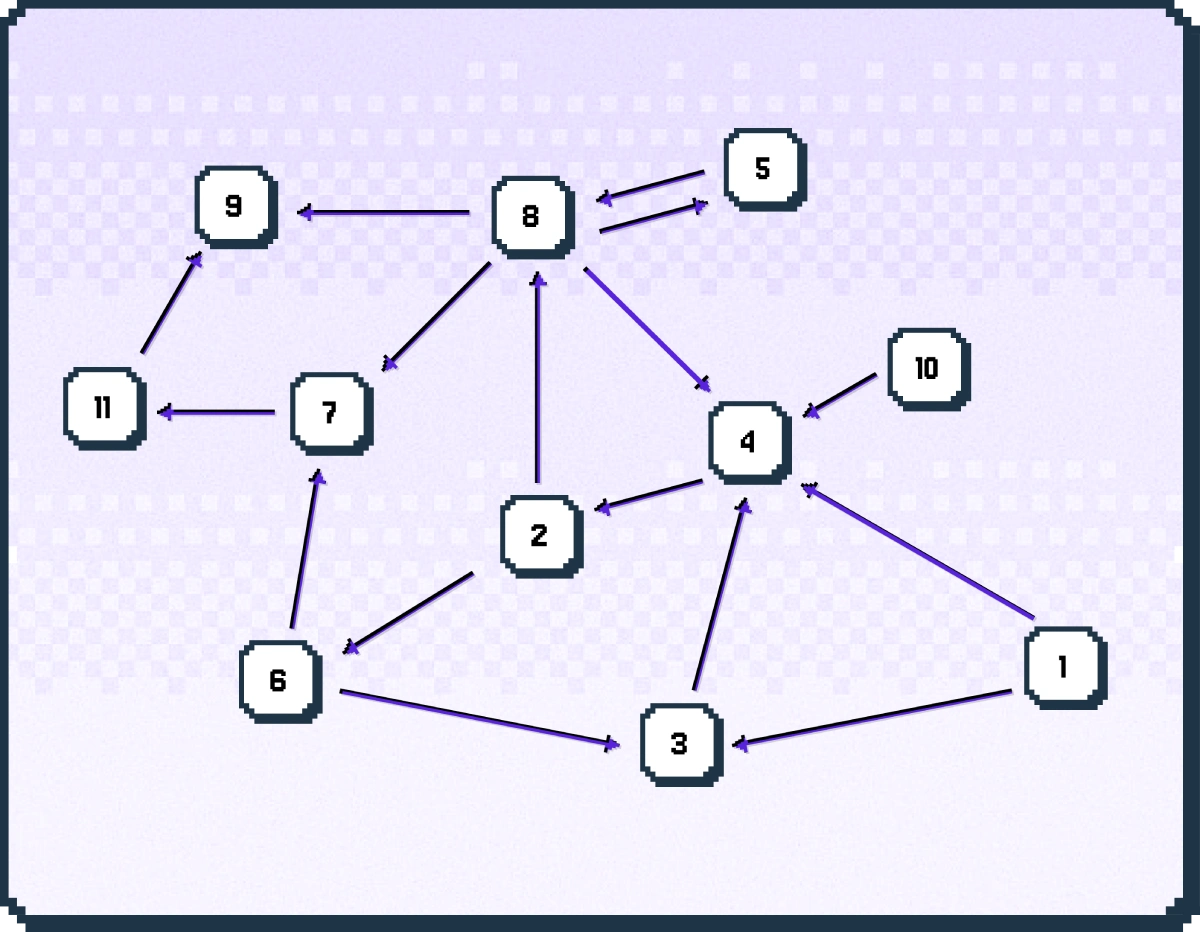
TL;DR: Introduce Stateflow, a task-solving paradigm that conceptualizes complex task-solving processes backed by LLMs as state machines. Introduce how to use GroupChat to realize such an idea with a customized speaker selection function.

Introduction

It is a notable trend to use Large Language Models (LLMs) to tackle complex tasks, e.g., tasks that require a sequence of actions and dynamic interaction with tools and external environments. In this paper, we propose StateFlow, a novel LLM-based task-solving paradigm that conceptualizes complex task-solving processes as state machines. In StateFlow, we distinguish between "process grounding” (via state and state transitions) and "sub-task solving” (through actions within a state), enhancing control and interpretability of the task-solving procedure. A state represents the status of a running process. The transitions between states are controlled by heuristic rules or decisions made by the LLM, allowing for a dynamic and adaptive progression. Upon entering a state, a series of actions is executed, involving not only calling LLMs guided by different prompts, but also the utilization of external tools as needed.

FSM Group Chat -- User-specified agent transitions

FSM Group Chat

Finite State Machine (FSM) Group Chat allows the user to constrain agent transitions.

TL;DR

Recently, FSM Group Chat is released that allows the user to input a transition graph to constrain agent transitions. This is useful as the number of agents increases because the number of transition pairs (N choose 2 combinations) increases exponentially increasing the risk of sub-optimal transitions, which leads to wastage of tokens and/or poor outcomes.

AutoGen with Custom Models: Empowering Users to Use Their Own Inference Mechanism

TL;DR

AutoGen now supports custom models! This feature empowers users to define and load their own models, allowing for a more flexible and personalized inference mechanism. By adhering to a specific protocol, you can integrate your custom model for use with AutoGen and respond to prompts any way needed by using any model/API call/hardcoded response you want.

NOTE: Depending on what model you use, you may need to play with the default prompts of the Agent's

AutoGenBench -- A Tool for Measuring and Evaluating AutoGen Agents

AutoGenBench

AutoGenBench is a standalone tool for evaluating AutoGen agents and workflows on common benchmarks.

TL;DR

Today we are releasing AutoGenBench - a tool for evaluating AutoGen agents and workflows on established LLM and agentic benchmarks.

AutoGenBench is a standalone command line tool, installable from PyPI, which handles downloading, configuring, running, and reporting supported benchmarks. AutoGenBench works best when run alongside Docker, since it uses Docker to isolate tests from one another.

Code execution is now by default inside docker container

TL;DR

AutoGen 0.2.8 enhances operational safety by making 'code execution inside a Docker container' the default setting, focusing on informing users about its operations and empowering them to make informed decisions regarding code execution.

The new release introduces a breaking change where the use_docker argument is set to True by default in code executing agents. This change underscores our commitment to prioritizing security and safety in AutoGen.